The social-media lead
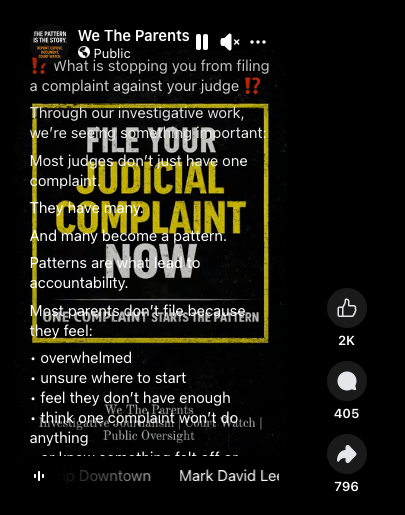
A public Facebook reel from We The Parents asks: “What is stopping you from filing a complaint against your judge?” The caption argues that many people do not file because they feel overwhelmed, unsure where to start, or believe one complaint will not matter. It says one incident — bias, an ethical violation, an ex parte communication, an inappropriate comment, a denied opportunity to be heard, or a conflict of interest — may be enough to begin a complaint process.
Open the supplied Facebook share link · Open the canonical reel URL
Canadian context: start with the right body
The reel uses U.S.-style terms such as JQC, JCC, JIB, and JCB. In Canada, the right complaint path depends on the court and judge:
- Federally appointed judges — start with the Canadian Judicial Council filing-a-complaint page.
- Provincial or territorial court judges — use that province or territory’s judicial council / judicial conduct office.
- Court staff, lawyers, police, opposing parties, or the result of a case — those may require a different route. A judicial conduct complaint is not the same thing as an appeal.
A source-grounded complaint checklist
Before filing, keep the record clear and restrained:
- Write down the court, case name/number if public, date, courtroom, and what happened.
- Quote the exact words or action you are concerned about, if you can do so accurately.
- Separate what you personally saw/heard from what someone else told you.
- Attach public documents, orders, transcripts, docket entries, or screenshots only where appropriate.
- Avoid private addresses, family details, insults, threats, or harassment language.
- If your concern is really about the outcome of a ruling, look at appeal/reconsideration deadlines separately from conduct complaints.
Why CanadianJudges.ca is saving this
CanadianJudges.ca tracks how judicial-accountability topics spread online. This reel is not tied to a specific Canadian judge profile; it belongs in the resources/source-trail section because it is about process, public education, and evidence discipline.
The site will continue to label social posts as leads only, then anchor public pages in official complaint pages, court records, mainstream reporting, or original public documents.